Each one starts somewhere a young person already wants to be, and ends with something finished and shown. Reach us at info@balancepointstudios.org to enroll or to bring a studio to your school.
Writing
The Most Promising
Creative Writing Studio
Ages 13–18FreeCohort
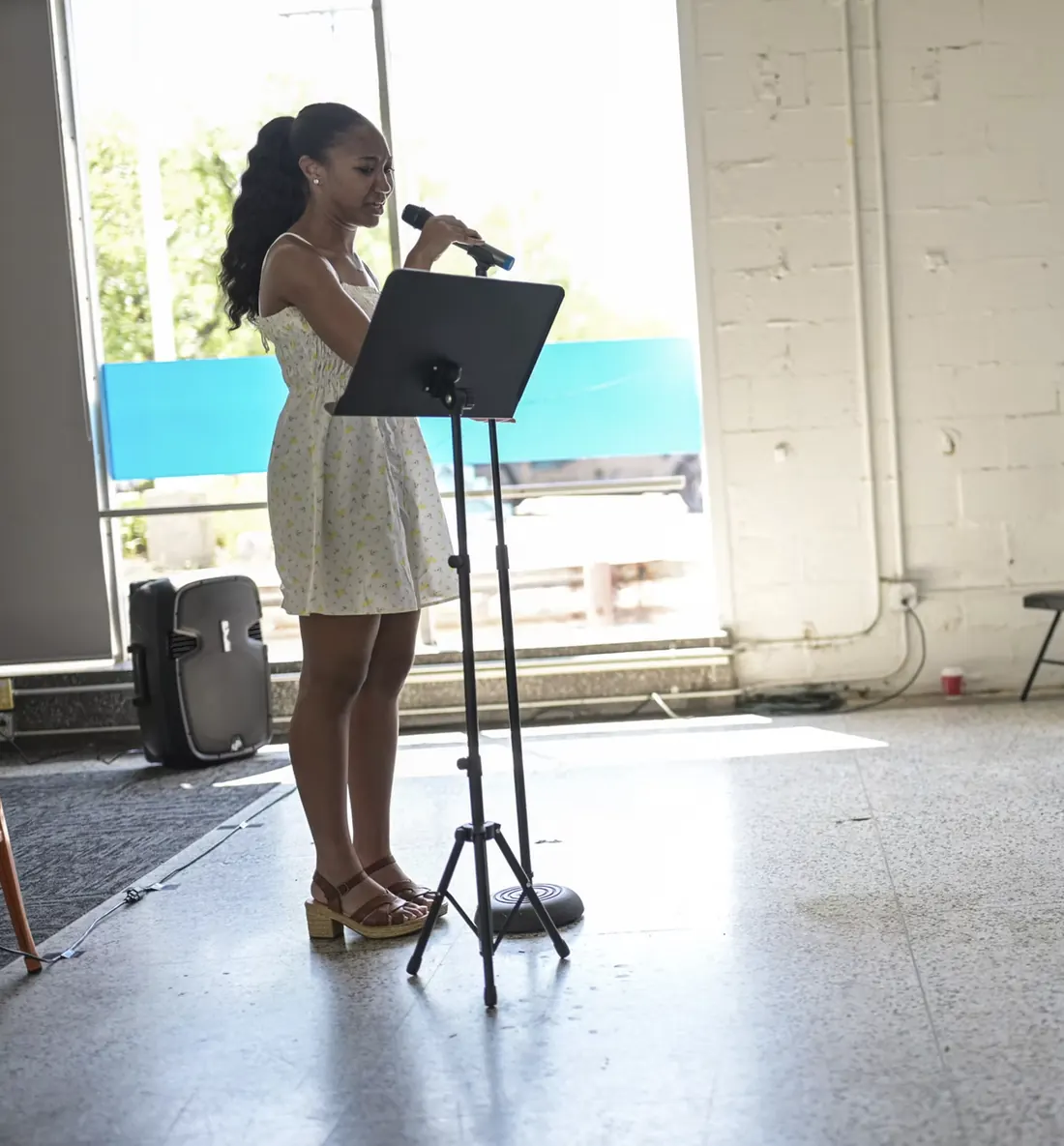
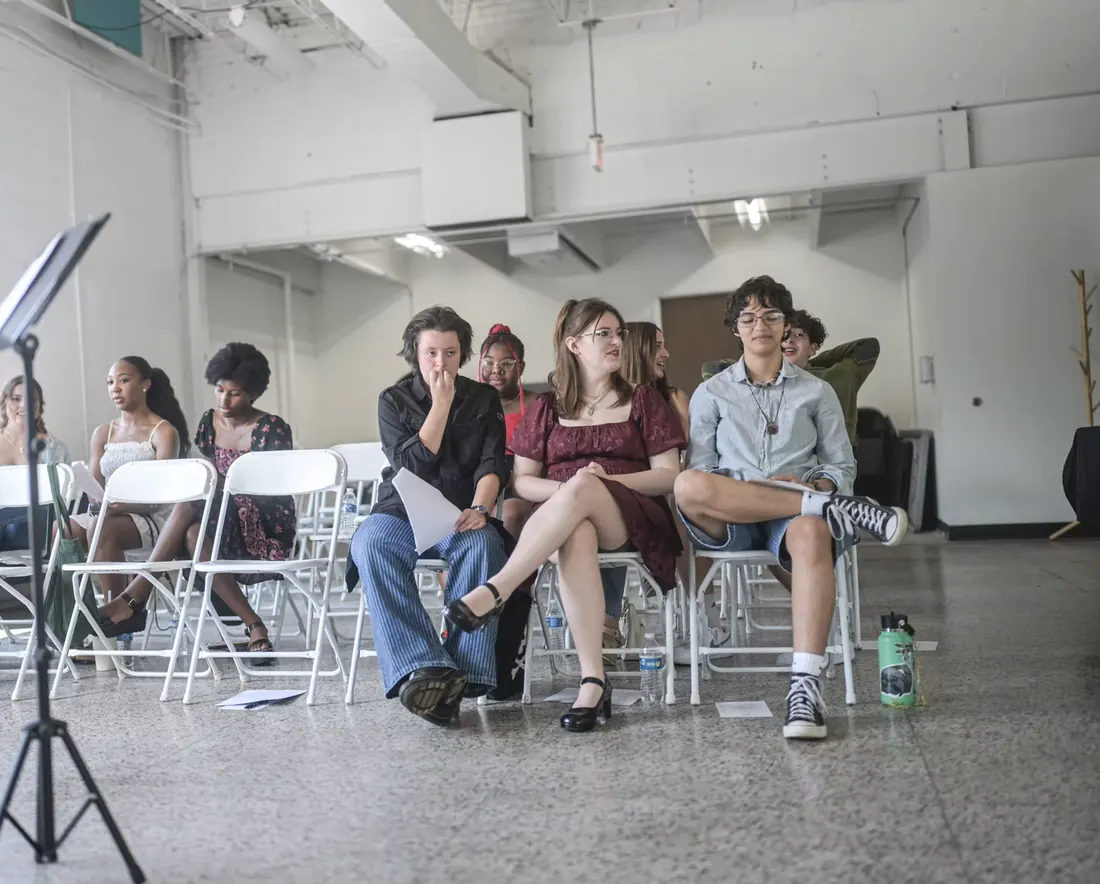
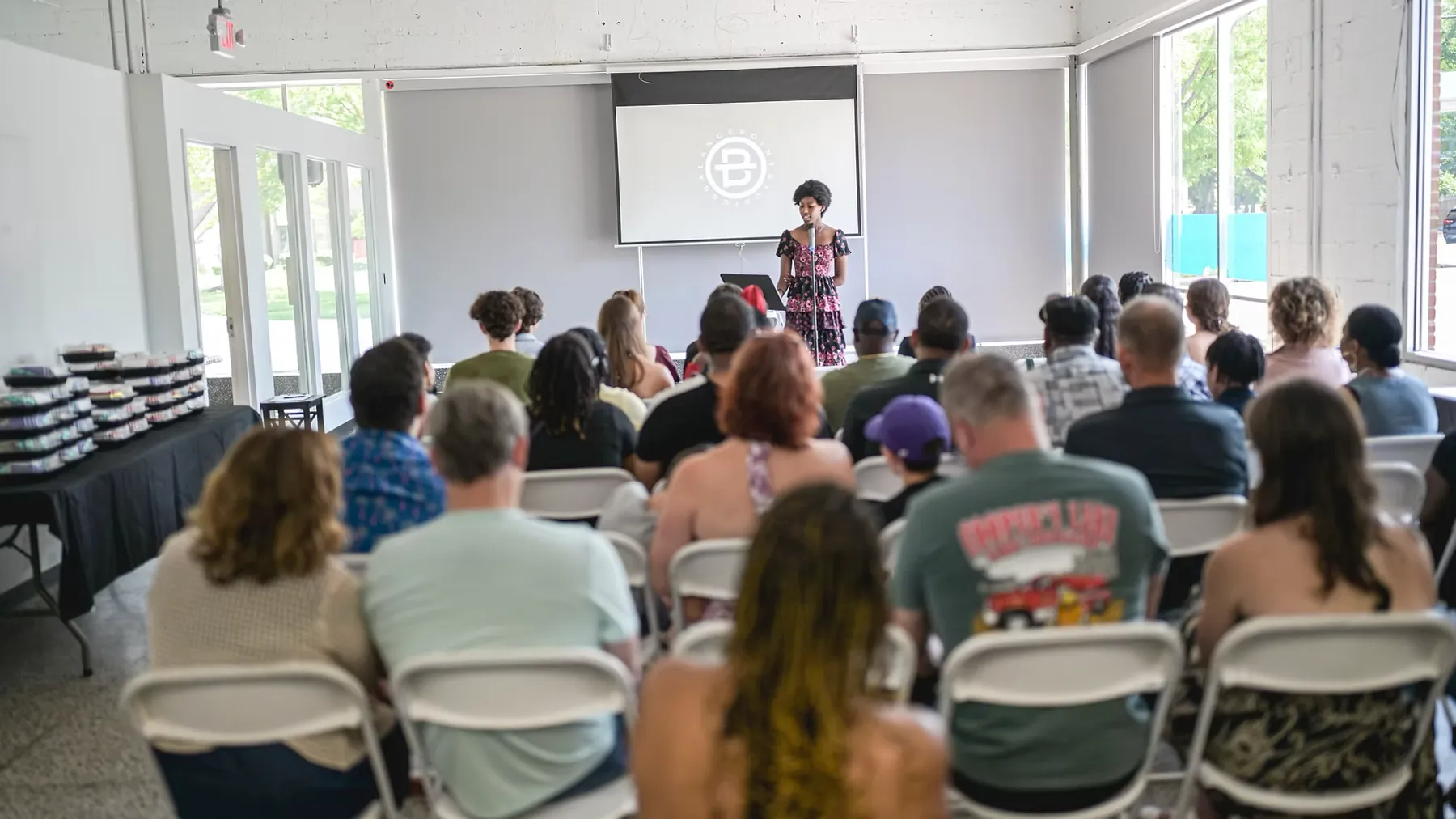
A writing cohort for young people who have never had a room built for their words. Drafts, revisions, and a night with a microphone and an audience — led by a published poet who has done this work for twenty-five years.
Led by a published poet and 25-year youth educator.
Writers draft, revise, and read their work aloud to an audience.
Built for young writers who have not had a room like this before.
Mentorship
Balance Point
Bike Studio
Ages 8–25FreeYear-round
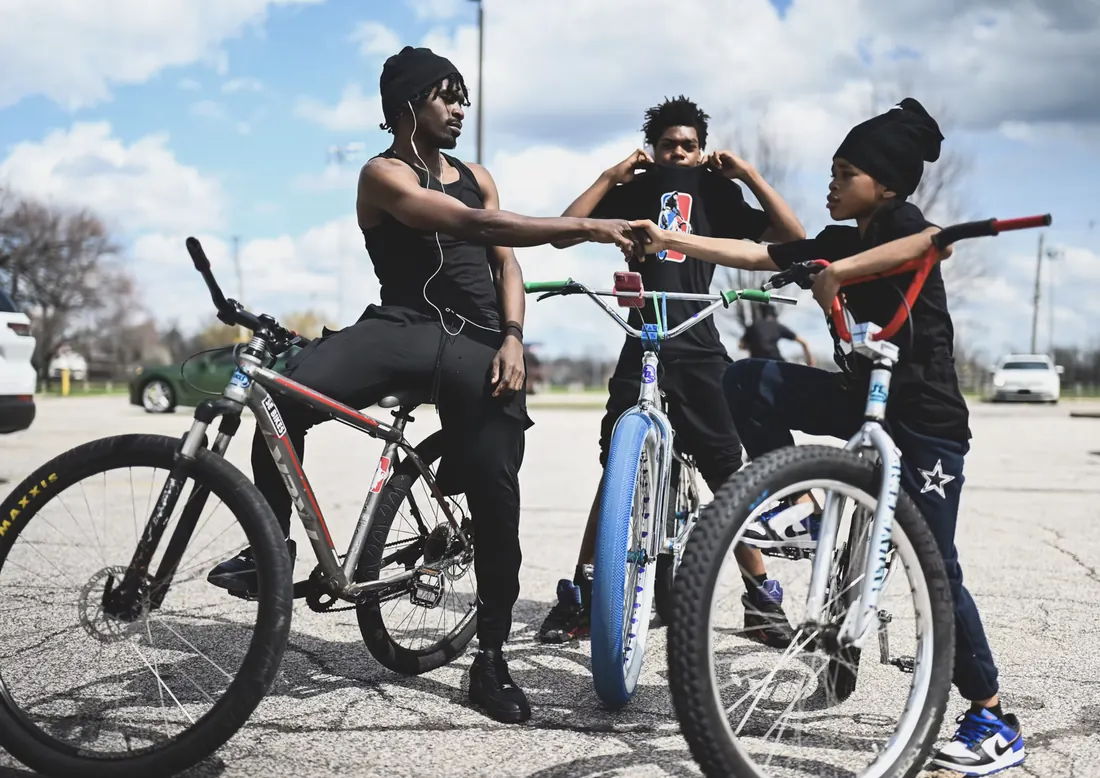
Free mentorship emphasizing community building through Wheelie Culture, videography, and education. The ride-out is the front door: it is where relationships start, and where everything else becomes possible.
More than 50 ride-outs organized to date.
Riders learn to shoot and cut video of their own culture.
Bike safety and healthy living are taught inside the ride, not around it.
Artist coaching
UnCut Art School
Artist Development Studio
Ages 13+FreeQuarterly critique
Artist coaching focused on discovering your artistic subject, your voice, and your medium — with quarterly critiques that hold the work to a real standard.
The work stays raw before it gets edited for anyone else — the name is the point.
Coaching from working artists with institutional teaching experience.
Open to adults as well as teenagers.
Print & enterprise
Mount Pleasant Printing
Printing Studio
Ages 14–25FreePaid-skill track
Where a design becomes a product and a product becomes a business. Young people learn to print garments by hand, then learn to sell what they made — e-commerce, web, and social media included.
Screen printing from separation and registration through the finished pull.
We have rarely said this out loud, so we will say it here. The reason we care so much that young people get to be themselves is that not being able to — not being able to say what you feel, make what you see, or be who you are in public — costs a young person mentally and behaviorally. Every studio we run is built on that belief.
So every studio carries two layers on purpose: social-emotional learning, the skills of knowing yourself, managing yourself, and getting along with others; and mental and behavioral health, a steady place to process what life brings and adults who notice when something is wrong.
Reading, writing & art
Social-emotional learning
Naming a feeling through a story, a poem, or an image. Seeing the world through someone else's eyes. Finishing a piece, standing behind it, and reading it to a room.
Mental & behavioral health
Expression as a way to process what happened, with a regular place to put it — and an adult who has known you long enough to notice when something is off.
The bikes
Social-emotional learning
Patience, judgment about risk, and skill that has to be earned one step at a time. Belonging to a crew. Older riders teaching younger ones, and learning to lead by doing it.
Mental & behavioral health
Riders describe the ride as the way they relieve stress. It is also somewhere a young person is good at something and known for it — identity and confidence that arrive before anyone asks for a test score.
What we do
Build social-emotional learning into every studio, not around it.
Make creative expression a regular practice, not a one-time event.
Be the trusted adults who keep showing up — for years, not a semester.
Know where to send a young person who needs more than we are.
What our clinical partners do
Screening and assessment, done by licensed professionals.
Counseling and treatment, with young people and their families' consent.
A clear referral path from our rooms to their care.
We don't treat. We are the adults young people already trust — and we know where to send them.
Social-emotional learning is one of the best-studied approaches in youth development: a landmark review of 213 school-based programs found improvements in behavior, attitudes and academic performance (Durlak et al., 2011). The evidence for mentoring from inside a young person's own culture is thinner, which is why we measure outcomes with partners rather than simply claim them.
And one campaign
Read Out
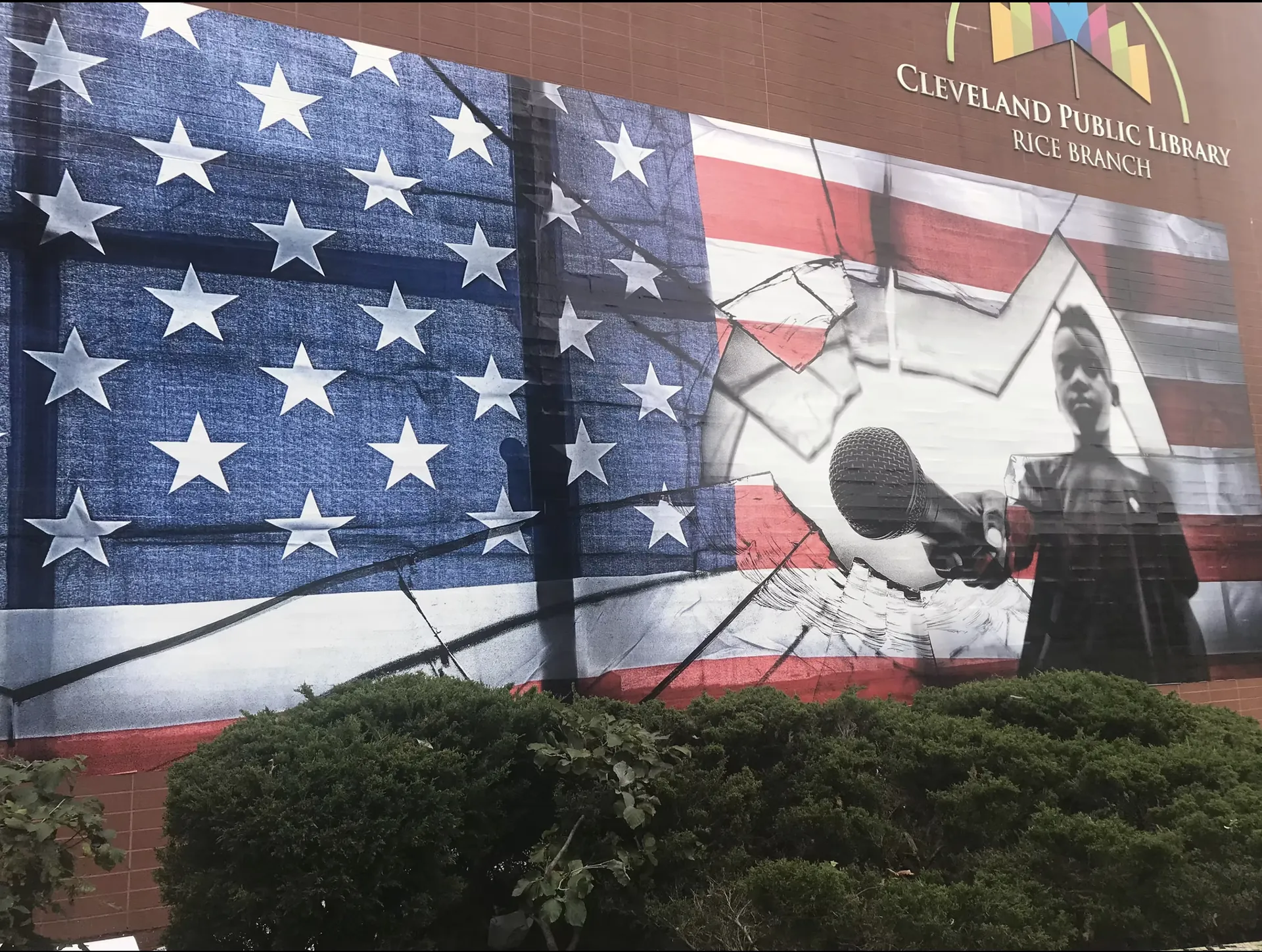
Four studios, plus a campaign that runs across all of them: a book drive where every donated book arrives with a video from the person it changed, paired with recorded read-alouds, partner-led reading assessments, and open classes that meet each reader where they are.
We already deliver programming with five Cleveland-area school districts. If you run a school, library, or youth organization, we'll build the fit with you.